

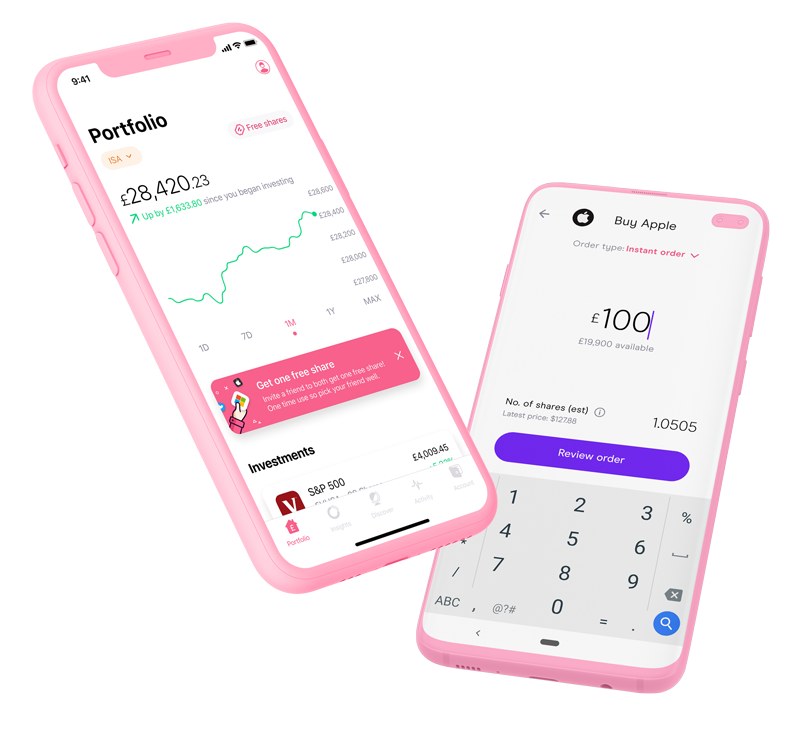
To invest in the stock market, you need an account with a stockbroker or online investment platform. In this lesson, we look at how to choose the best online stock broker in the UK for your needs, with fees checked on each provider’s website in October 2026.
When investing, your capital is at risk and you may get back less than you invest.
How to choose an online stock broker
Choosing a broker can feel daunting, but it comes down to a few criteria.
- Cost: fees have a big effect on long-term returns. Look at four types: dealing fees (each time you buy or sell), account or platform fees (a flat or percentage charge on your portfolio), currency conversion fees (when you buy shares priced in dollars or euros) and exit fees (when you move to another provider).
- Account types: check the broker offers the accounts you need, such as a Stocks and Shares ISA, a SIPP or a Junior ISA. Gains and income inside an ISA or SIPP are tax-free.
- Ease of use: some brokers are app-only, others offer a website and phone dealing too.
- Investment range: some platforms focus on UK and US shares, while others offer funds, investment trusts, bonds and international markets.
- Research and tools: some brokers provide research and data, others are execution-only. Much of the data you need is available free online.
- Customer service and satisfaction: check recent reviews on Trustpilot and ask how you can contact the broker if something goes wrong.
- Security: make sure the broker is authorised by the Financial Conduct Authority (FCA). You can check on the FCA register. If an FCA-authorised firm fails and can’t return your investments, the FSCS may cover up to £85,000 per person. Always log in through the official app or website, and turn on two-factor authentication.
Different providers have different strengths. Generally, a platform with more research and service costs more. If you do your own research, there’s no point paying for features you won’t use.
Popular online stock brokers in the UK
| Broker | UK share dealing | Account fee | FX fee |
|---|---|---|---|
| Freetrade | £0 commission | Basic £0; Standard £4.99 or Plus £9.99 a month (billed annually) | 0.99% (Basic) to 0.39% (Plus) |
| Trading 212 | No commission | £0 | 0.15% |
| IG | £0 commission | £0 | 0.7% |
| AJ Bell | £5 (£3.50 if 10+ deals a month) | 0.25% a year, capped at £3.50 a month for shares | Applies, see AJ Bell’s site |
| Interactive Investor | £3.99 | From £5.99 a month (Core plan) | 0.75% |
| Hargreaves Lansdown | £6.95 (£3.95 if 20+ deals a month) | 0.35% a year on funds; capped at £150 a year for shares | Applies, see HL’s site |
Fees as listed on each provider’s website in October 2026. Other fees may apply. Check the full charges before you open an account.
Other providers you may come across include Barclays Smart Investor, HSBC InvestDirect, Halifax Share Dealing, Scottish Widows Share Dealing (formerly iWeb), Bestinvest and Shareview. DEGIRO has paused new UK accounts and isn’t authorised by the FCA, so its UK clients aren’t covered by the FSCS.
Comparing the main online stock brokers
Freetrade
Freetrade is an app-based broker that charges no commission on share trades. It’s been part of IG Group since 2025. Read our full Freetrade review.
Pros:
- No commission on trades, so small investors aren’t eaten up by dealing fees.
- Simple, well-designed app.
- Fractional US shares, so you can build a diversified portfolio with small amounts.
- ISA and SIPP available on all plans, including the free Basic plan.
Cons:
- 0.99% FX fee on the Basic plan when you buy US shares.
- Mostly app-based.
Why does commission matter? Say a broker charges £6.95 a trade and you buy £100 of shares. You’re down 7% before the price moves, and you pay again when you sell. On £20,000 the same fee is just 0.03%. Commission-free dealing makes the biggest difference for small, regular investments.
New Freetrade customers can get a free share worth £10 to £100 when they sign up through a referral link and fund their account with £50. When investing, your capital is at risk.
Trading 212
Trading 212 is an app-based broker offering shares, ETFs, a Stocks and Shares ISA and a SIPP. Trading 212 UK Ltd is authorised and regulated by the FCA (FRN 609146). There’s no minimum deposit.
Pros:
- No commission. Other fees may apply. See terms and fees.
- Low FX fee: 0.15% FX fee applies when converting funds. Other fees may apply.
- Fractional shares and Pies for building a portfolio.
Cons:
- App-led, with limited research tools.
Pies & AutoInvest is a feature for automated investing. It should not be considered as investment advice. When investing, your capital is at risk and you may get back less than invested. Past performance doesn’t guarantee future results.
Sponsored code. To get a free fractional share worth up to £100, you can open an account with Trading 212 using the code FINTECH or this link. The share is worth between £8 and £100, and 80% of rewards are worth £25 or less. Terms apply.
Hargreaves Lansdown
HL is the UK’s largest investment platform, with around 2 million clients. It’s known for its wide investment range, research and customer service, but it’s one of the pricier options.
Pros:
- Very wide range of shares, funds, investment trusts and bonds.
- Easy-to-use website and app.
- Free research, guides and tools.
- All the main accounts: Fund and Share Account, ISA, Lifetime ISA, Junior ISA, SIPP and an Active Savings account.
Cons:
- Higher costs: £6.95 per share trade and a 0.35% account charge on funds, plus £1.95 per fund trade, since 1 March 2026.
- HL’s Wealth Shortlist of favoured funds is a starting point, not advice. HL’s former Wealth 50 list included the Woodford Equity Income fund before it was suspended in 2019.
AJ Bell
AJ Bell (formerly AJ Bell Youinvest) is one of HL’s closest rivals, with similar features at a lower cost.
Pros:
- Lower account charge: 0.25% a year, capped at £3.50 a month for shares.
- Fund deals cost £1.50, and regular investing from £25 a month is free to deal.
- Good app and website.
- ISA, Lifetime ISA, Junior ISA, SIPP and Dealing account.
Cons:
- £5 per online share deal.
Interactive Investor
ii charges a flat monthly fee instead of a percentage, which suits larger portfolios. Plans start at £5.99 a month, and UK and US share trades cost £3.99.
Pros:
- Flat fee, so costs don’t rise as your portfolio grows.
- Wide range of investments, including international markets.
Cons:
- The flat fee is expensive for small portfolios. £71.88 a year is 7% of a £1,000 portfolio.
- 0.75% FX fee on the standard plans.
IG
IG, founded in 1974, offers commission-free UK and US share dealing, a Stocks and Shares ISA and a SIPP.
Pros:
- No commission on UK and US shares under standard terms.
- No custody or inactivity fee.
- Strong trading tools and app.
Cons:
- 0.7% FX fee on international shares.
- IG’s SIPP is run by a third party, Options Pensions, which charges £205 a year.
Next steps
These platforms all let you buy and sell shares in your favourite companies. Whichever you pick, the process of buying shares is similar. In the next lesson, we explain how to place a trade and the different types of order.
Disclaimer: This is not financial advice. Fees change, so check each provider’s website before you open an account.
Pedro is passionate about finance, marketing, and technology. He is a growth manager at several online projects and a former digital marketer for a fintech company.
